In healthy democracies, the military protects the nation, not the ruling party.
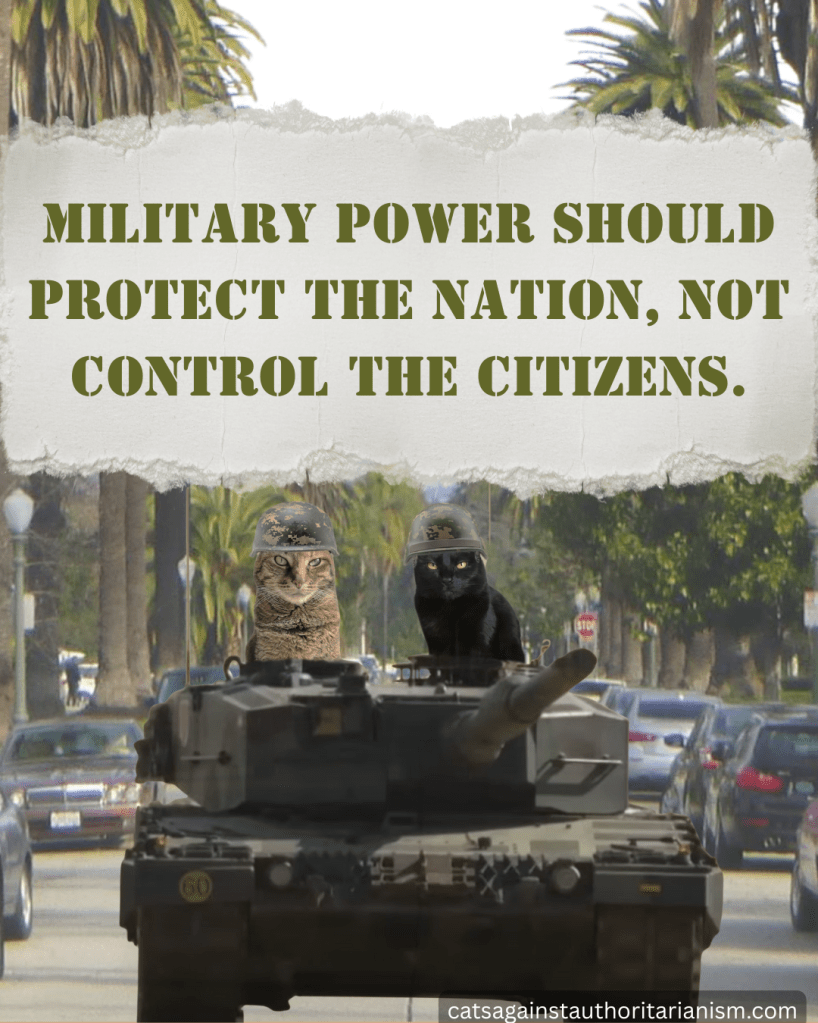
Authoritarian leaders cross a dangerous line when they deploy soldiers, federal agents, or heavily armed forces against their own people. Whether it’s breaking up protests, intimidation, or patrolling communities under the guise of “safety”, the goal is the same: to silence dissent and make citizens fear their own government.
When a government turns its weapons inward, it stops serving the people, and starts ruling over them.
Citizens can resist this tactic (and authoritarianism in general) through nonviolent, collective action that makes repression harder to sustain. Some key ways:
- Document and Expose – film, photograph, and share incidents of military or police repression; visibility reduces impunity.
- Peaceful Mass Mobilization – large, nonviolent protests make it harder for leaders to justify crackdowns.
- Legal Challenges – support lawsuits and watchdog groups that push back against unlawful use of force.
- Independent Media Support – follow and fund journalists who report honestly on abuses.
- Solidarity Networks – communities protecting each other, offering safe spaces, and ensuring protesters aren’t isolated.
- Civic Pressure – voting, lobbying, and demanding lawmakers set limits on domestic military deployment, or follow existing laws.
- International Attention – connecting with human rights groups abroad to raise costs for authoritarian leaders. The international spotlight shines harshly, so leaders can’t hide human rights abuses.
- Build Alliances – unite labor unions, student groups, religious organizations, and community leaders; broad coalitions are harder to crush.
- Protect the Vulnerable – organize rapid response teams to monitor at-risk communities and offer support.
- Decentralize Organization – avoid single leaders; horizontal networks make movements harder to dismantle.
- Culture & Art – satire, street art, music, and symbols can spread resistance even under censorship.
- Economic Pressure – boycotts, strikes, and divestment campaigns weaken authoritarian regimes’ resources.
- Digital Security – use encrypted messaging, VPNs, and digital hygiene to stay safe when organizing.
- Education – teach others how authoritarian tactics work; awareness reduces fear and manipulation. There’s a playbook and leaders are following it. Use that to stay informed and learn from history.
- Stay Nonviolent – history shows sustained, disciplined nonviolent movements are twice as effective as violent resistance in defeating authoritarian regimes.
The key: don’t fight violence with violence. Authoritarian leaders want citizens to lash out so they can justify more force. Nonviolent resistance, organization, and persistence are historically the most effective counters.
 Cats Against Authoritarianism
Leave a comment